Search This Blog

Friday, December 11, 2009

Render Visible - Art Show by New UNM-Taos Faculty Member

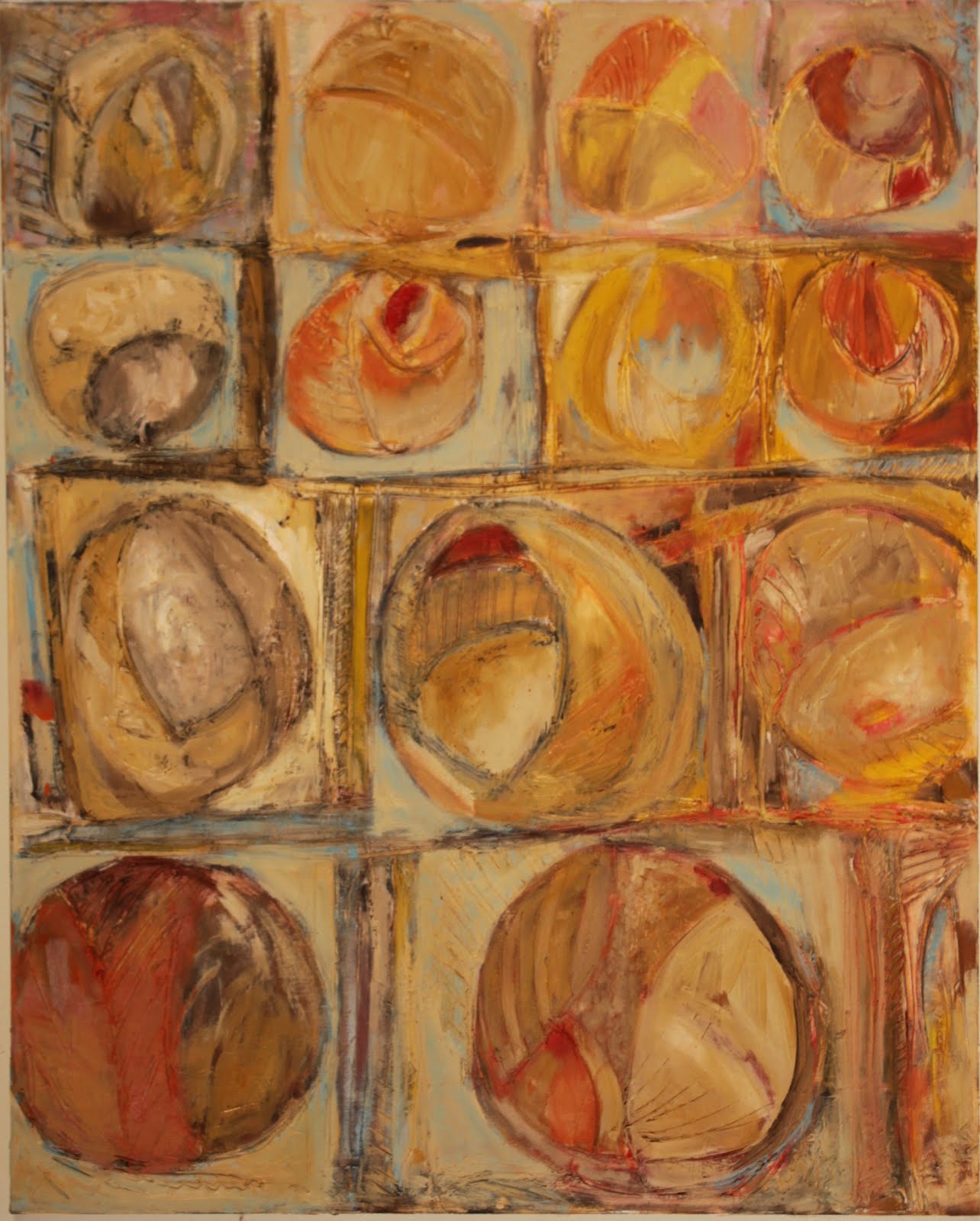
"RENDER VISIBLE" EXHIBITION: Paintings, Drawings, and Prints by Jeremy McDonnell, a new member of the UNM-Taos Arts faculty.


“Render Visible”, an exhibition of painting, drawing, and prints by Jeremy McDonnell will be on display at UNM-Taos Klauer campus until December 11th in the Art building lobby. Show hours will be 9 a.m. to 5 p.m. Monday through Saturday.

McDonnell's art incorporates visual phenomena in both real and illusionary space. He skillfully uses pictorial elements like rhythm and movement to push visual and spatial perceptions from single to multiple readings. McDonnell's underlying goal is to explore how the human brain understands images.

The exhibition introduces Mr. McDonnell as a new faculty member at UNM-Taos. He holds an M.F.A. from Ohio State University, where he was awarded a full fellowship. He will be teaching courses in Art History, Painting and Digital Portfolio Development in the lower and upper division programs at UNM starting in the Spring 2010 semester.

Contact: Sabra Sowell, Arts Academy Program Coordinator
Phone: (575) 737-6256

Monday, December 7, 2009

Ecology at UNM Taos


GREETINGS TO ALL & MANY HEARTFELT THANKS for your continued interest!
By popular request, I'm adding the four course descriptions for our upcoming Spring
semester. As always, please feel free to contact me with any questions or suggestions. Now more than ever, EARLY ENROLLMENT WILL BE KEY to these and all course offerings!

Most of all, I would like to congratulate everyone on the GREAT academic year underway, during which two key regional ecology and sustainability courses continue to gather momentum:

Ecology of Taos and Plants and Sustainability in the Southwest. Coordinated and individual student efforts have already co ntributed in many positive, creative and progressive ways, including in-depth discussions, presentations, field excursions, hands-on evaluations, and much more!

Such impressive engagement, dedication and collaboration served as the touchstone to many activities this Fall, including creating the recently chartered UNM-Taos Ecology Club, collaborating on regional and local sustainability events and programs, expanding mentoring and internship opportunities, participating in local and regional meetings and conferences, and many more amazing outcomes related to biodiversity, cultural ecology, sustainability studies, and all affecting the what we rely on most: the earth, sky, water and all the company we keep, especially each other.

Most of all, please accept my GRATITUDE for your support, encouragement and active participation in our evolving, multicultural and intergenerational study of restoration ecology, cultural and ecological sustainability, botany, regional field study, ecology, biodiversity, environmental history, natural science and MORE! In this collective striving, we learn from each other and add strength to our focus in so many ways . . with best wishes for the Winter Solstice, holidays, and a very peaceful, joyful New Year and beyond,

-Sylvia

Sylvia Rains Dennis
Faculty, Botany, Ecology & Environmental History
Coordinator for Cultural & Ecological Sustainability Education
University of New Mexico at Taos
sdennis@unm.edu phone: 575-770-9040
mailing address: Dept. of Instruction, 115 Civic Plaza Dr., Taos, NM 87571

PS: Classes begin Jan 19th (Tues.). Please stay in touch about mid-January ecology events, if you'd like to come alon g!

Four course descriptions follow & are attached:

Plant Identification Seminar
BIO299-805 (3 credit hours); CRN 36960
meets Weds. 3-5:30 PM in Klauer Campus Rm. 115
Description:
Introducing our regional flora, this course will focus on identifying and describing plant species in North-central New Mexico. Class meetings will focus on three main categories of our local vegetation: 1. woody plants; 2. herbaceous species (non-grasslike); and, 3. grasses, sedges & rushes. In addition, we will consider fire ecology, native vs. non-native species, botanical applications to related disciplines (including wildlife habitat, forest indicator species, and wetland/riparian descriptions). Students work both independently and collaboratively--identifying local plant species using a range of botanical reference material--to gain fundamental understanding of our regional flora, as well as local botanical diversity.

By adopting a unique plant family for the term, each student considers a specific context for engaging and responding to contemporary botanical issues, including topics introduced by guests and/or fellow students. Some current examples relate to fire behavior, invasive species, taxonomic changes, or plant conservation. Plant profiles detailing habitat change, adaptation, and land use factors are among the many topics covered during peer presentations. Hands-on and collective assignments are layered throughout the course to build upon knowledge and skills learned in previous class meetings, including identification methods, ecological descriptions, plant uses, dendrology, winter botany, and professional keying of plant species.


Restoration Ecology in Northern New Mexico
BIO 299-801 (3 credits); CRN 35128
meets Thurs., 3-5:30 PM in Klauer Campus Rm. 115
Description:
Focusing on recent restoration efforts in Northern New
Mexico, students will examine land and watershed sites in
natural, cultivated, disturbed and restored conditions. We
will tour three field sites in the Upper Rio Grande
region, observing site-specific ecological restoration
objectives and outcomes in forested, wetland/riparian
(bosque) and range- or shrubland settings. Students will
also have the opportunity to attend local and regional
meetings that include a restoration focus, including
possible attendance at professional conference sessions as
their instructor’s guests.
Through project review and collaborative restoration case
studies, students gain in-depth knowledge of restoration
planning, base line mapping, and progressive stages of
project implementation, expanding their understanding of
real-world restoration programs through field study and
attendance at professional meetings and conferences.
Students examine a range of reasons for restoration,
including highly disturbed sites, post-fire scenarios,
weed or other infestation, biodiversity, habitat
improvement, and culturally or ecologically-specific site
considerations.
Culminating in late spring site visits to active
restoration projects, course participants are able to
integrate concepts learned from these examples with
independent research on restoration ecology themes using
systems science and ecocultural approaches to consider new
and traditional efforts to restore landscapes and
watershed features in Northern New Mexico, including
forest, mesa, bosque, and wetland areas. By increasing
their understanding of local and regional examples,
students can ana lyze restoration ecology approaches in the
context of far-reaching national and international
restoration goals (e.g., Watershed Health; Biodiversity).


Environmental History of the Upper Río Grande Region

E&PS 110-802 (3 credit hours), CRN 38496
meets Tues., 3-5:30 PM in Klauer Campus Rm. 115
Description:
Introducing the landscape and ecological features of the
Upper Río Grande Region, this course will consider
vegetation, wildlife, watershed, climate, and other
changes to our local environment over periods of human
settlement and as a result of extended natural cycles. We
will interpret all available sources of environmental
history, including oral tradition; ecological study and
reconstruction of landscape trends; climate records;
information on natural and human-introduced changes; and
positions of guest speakers on local l and and water
issues.
Each class meeting begins in talking circle format as we
consider journal responses to specific environmental
history topics, ranging from global to local examples. By
engaging in individual, group and guest presentations,
students increase their awareness and understanding of
issues affecting the people, range of natural habitats,
and land uses found in the Upper Río Grande Region. Each
individual chooses a local example to profile the site’s
imprint and degree of environmental change, incorporating
maps, ecological descriptions, land use, settlement or
other impacts, and an interview assignment (concluding
with an in-class presentation and peer review exercise).

Introduction to Environmental Problems
CRP 181-800 (3 credit hours); CRN 38384
meets Weds. 12-2:30 PM, Klauer Campus Rm. 112
Description:
Thi s course explores the development of the major issues,
concepts and methods emerging from the relationship of
social systems and the natural environment. By taking a
broad view of cultural geography, students will consider
human-environment interaction as a factor of individual
and community need, political and social organization, and
ecological change. Students will explore issues and
conditions prevalent among traditional, rural, and larger
communities in the contemporary American west, as well as
consider compatibility and sustainability factors within
the carrying capacity of specific landscapes or watershed
features.
We will examine several current issues specific to the
Southwestern Region in detail, inviting collaborative
program members and lead agency managers, among others, to
discuss trends, policies and procedures that address a
range of social and environmental objectives. Questions
related to this study inc lude: How does the level of
human integration with the natural environment influence
overall resource access and decision-making? Are
issues-based stakeholder groups representative of the
potential for collaboration among local citizens? What
methods are used to determine, plan and implement any
perceived desired future outcomes?

Wednesday, November 18, 2009

Beautiful Bargains - UNM-Taos Holiday Student Art Sale - This Friday and Saturday only!

Are you looking for a breathtakingly beautiful, original painting or drawing but want it to be affordable? Do you love gorgeous, unique jewelry and love a bargain? Or are you just looking for extraordinary (and economical) gifts for your loved ones?

Here's your chance. At the UNM-Taos Holiday Student Art Sale you’re going to find the best prices on new, original art in Taos.

Jewelry, Ceramics, Photography, Prints, and Paintings by UNM-Taos art students will be on sale Friday and Saturday, November 20 and 21, 2009 from 9:00am – 4:00 p.m. at UNM-Taos Klauer Campus (by the golf course) in the Art Building lobby.

A reception, featuring fabulous finger food and delicious desserts by the UNM-Taos Culinary Arts department, will be held on Saturday from 2:00-4:00pm.

Click on the movie below for images of more student art - including jewelry - from past shows:


The UNM-Taos Holiday Student Art Sale is a chance to find one-of-a-kind visual and decorative arts at incredible prices. And remember: students are both emerging talents as well as established professional artists.

It’s a twice-a-year opportunity to bring more beauty into your world, affordably. (The next show is in the spring.) Plus, you'll be encouraging UNM-Taos art students in their work. It’s a great way to support the arts community in Northern New Mexico.

The Holiday Art Sale is a rare chance to find emerging artists before they are discovered by galleries. As highlighted in CollegeArtOnline.com, student art sales give "art enthusiasts the chance to buy an original piece of art and collect works” from up-and-coming artists. Student art sales are “where student art becomes fine art."

Even Picasso was an art student once. And who knows; you might find a piece by the next Agnes Martin or Larry Bell!

As an added bonus, concurrent with the Art Sale is the opening of a show of prints and paintings by new Arts Academy professor Jeremy McDonnell.

For more details, please call UNM-Taos Arts Academy Program Coordinator Sabra Sowell at (575) 737-6256.

UNM-Taos is a branch campus of the University of New Mexico. The Arts Academy offers classes year round in the visual and performing arts including Jewelry, Ceramics, Photography, Printmaking, Pueblo Pottery, Painting, 2D and 3D Design, Motion Media/Film, Dance and Music. Our hallmark is dedicated, experienced educators who care deeply about their students and are professional practicing artists.

Thursday, October 29, 2009

New Academic Advisor


Hello Everyone.
The new Academic Advisor for the UNM-Taos Bachelor and Graduate Programs through Extended University is Fidel Torres, M.A. He
comes to us from Arizona State University. He has over 10 years of experience working with post-secondary students in areas of academic advisement, career advisement, scholarship resources, learning resources, and student success skills. Fidel is here to help you transition from UNM-Taos Branch to UNM-Taos BGP Extended University and
pursue your Bachelor and Graduate degrees. Fidel is an alumnus of UNM, and proud to be a Lobo!

Please call UNM-Taos Bachelor and Graduate Programs at 758-2828 to
schedule an appointment or schedule an appointment in person at our
office located at 246-B Ledoux Street (next to the Harwood Museum).


Fidel’s schedule for advisement appointments:
  • Monday 9 a.m. – 12 p.m., 1 p.m. - 3 p.m.
  • Tuesday 9 a.m. – 12 p.m., 1 p.m. - 3 p.m.
  • Wednesday 10 a.m. – 12 p.m., 1 p.m. - 3 p.m.

*Schedule is subject to change